
How to Water Your Lawn: How Much, How Often, and When
How much, how often and when, plus the can test to measure your sprinkler.
Quick answer
Cool-season lawns need about 1 to 1.5 inches of water a week to stay green and actively growing (Illinois Extension). Water deeply and infrequently, in the early morning, and measure what your sprinkler delivers with straight-sided cans.
Jump to section
How much water a lawn needs
Illinois Extension says cool-season lawns need about 1 to 1.5 inches of water per week to stay green and actively growing (Illinois Extension).
The figure is for cool-season grass, so treat it as a target to adjust for your own lawn, not a fixed rule. If you do not know which grass you have, our mowing height guide lists the common cool-season and warm-season types, and a local extension office can help identify yours.
Most of the work in lawn watering is getting that amount onto the grass without waste. The next sections cover how to apply it, when, and how to check that it is working. Each one rests on the Illinois Extension and EPA pages linked in it, so you can read the originals if you want more detail than we give here.
The numbers you will use most often are collected here.
| Question | Answer | Source |
|---|---|---|
| Weekly water for cool-season grass | About 1 to 1.5 inches | Illinois Extension |
| How to apply it | Infrequently but thoroughly, to root depth | Illinois Extension |
| Best time of day | Early morning | Illinois Extension |
| How to measure output | Straight-sided cans on the lawn | Illinois Extension |
| Waste from inefficient irrigation | Up to 50% | EPA WaterSense |
| Savings from a WaterSense-labeled controller | Up to 30% | EPA WaterSense |
A weekly schedule is simple to set once you know your sprinkler's output. If one session delivers only part of the weekly target, you can plan more than one session across the week. The exact count depends on your measurements, which is why the can test below matters.
Deep and infrequent beats daily sprinkles
Illinois Extension advises watering infrequently but thoroughly, to the depth of the roots. Newly seeded lawns are an exception (Illinois Extension). A short sprinkle every day wets only the top of the soil. A longer, less frequent watering soaks down to where the roots are.
You can check how deep the water went. Illinois Extension suggests pushing a long screwdriver into the soil to check how far the water went (Illinois Extension). Note how far it goes in and where it stops. That gives you a simple way to judge whether your watering time is long enough for the roots, and you can repeat the check any time you change the schedule.
Newly seeded lawns are the exception Illinois Extension names, so follow the instructions on the seed label for new seeding rather than the deep-and-infrequent pattern.
The best time of day
Water early in the morning. Illinois Extension says midday watering loses much of the water to evaporation, and night watering can promote turf diseases (Illinois Extension).
A hose timer or a smart controller can start and stop the sprinkler for you at that hour. We compare them in our guide to the best smart sprinkler controllers and hose timers.
The can test: measure your sprinkler
The can test shows you what your own sprinkler delivers. Illinois Extension says to measure output with straight-sided cans set on the lawn (Illinois Extension).
How to run the test:
- Set several straight-sided cans at different distances from the sprinkler, spread across the area it covers.
- Run the sprinkler for a set time that you note down.
- Measure the depth of water in each can with a ruler.
- Compare the cans. If the numbers differ a lot, your coverage is uneven, and you may need to move the sprinkler or overlap two positions.
- Use the average to work out how long to run the sprinkler to reach the weekly amount you are aiming for.
Then check penetration with the screwdriver, as in the section above. The two tests together tell you how much water you applied and how far it went. Repeat both whenever you change sprinklers, move the sprinkler to a new spot or notice that your water pressure has changed.
Keep a note of the results next to the faucet or in your phone. When the weather turns hot and dry, you can adjust the run time from a known starting point, instead of guessing.
When you choose a sprinkler, look at coverage, pattern control and flow control. Our guide to the best lawn sprinklers lists those specs, and the can test tells you whether the sprinkler performs the way the listing says.
Summer dormancy
Cool-season lawns can go dormant in hot, dry summers, and they usually recover in autumn. Illinois Extension advises avoiding cycling between green-up and dormancy (Illinois Extension). That means that if you decide to keep the lawn green through summer, keep watering it consistently, rather than letting it dry out and then soaking it again.
Illinois Extension says dormant cool-season lawns usually recover in autumn, so a brown lawn in a hot, dry summer is not necessarily a failed one. The choice between keeping it green and letting it rest is yours. Either way, consistency matters more than switching back and forth. If you are unsure what to do for your area, a local extension office can advise on the local climate.
How much outdoor water gets wasted
EPA says outdoor use is more than 30% of household water use on average, and it can reach 60% in arid regions (EPA WaterSense). It also says that up to 50% of outdoor water is lost to wind, evaporation and runoff from inefficient irrigation, and that a poorly maintained automatic system can waste up to 25,000 gallons a year (EPA WaterSense).
Those numbers are the reason to measure and maintain your watering: the waste is real, and the can test and a leak check are the cheapest ways to find it. A few habits cut waste:
- Water early in the morning, as above.
- Aim the sprinkler at the lawn, not at the driveway or the street.
- Check hoses, connectors and sprinkler heads for leaks.
- Stop watering when rain does the job.
Smart controllers and timers
A controller automates the schedule. EPA says that swapping a clock-based controller for a WaterSense-labeled one can cut an average home's irrigation water use by up to 30%, or up to 15,000 gallons a year (EPA WaterSense). Those are upper estimates, and the actual savings depend on your system.
If you have an in-ground system, look for a controller with the WaterSense label and weather-based scheduling. If you water with a hose, a hose timer on the faucet does the early-morning work. Our smart sprinkler controller guide compares zones, connectivity and weather features, with a column for the WaterSense label.
A controller only handles the timing. Even the best controller needs the right total. Run the can test, set the weekly amount near what your grass needs, and adjust with the seasons.
Gear that helps
-
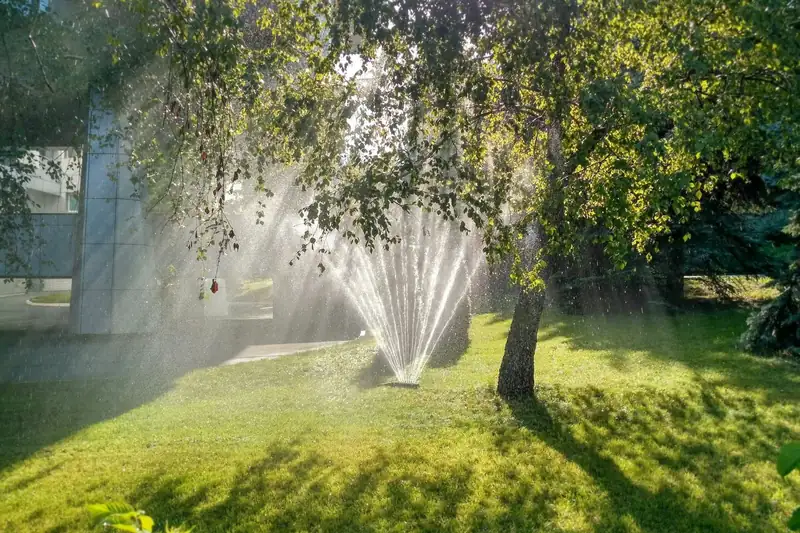
Best Lawn Sprinklers
Compare sprinkler types by coverage, pattern control and flow control, then run the can test on the one you pick.
-
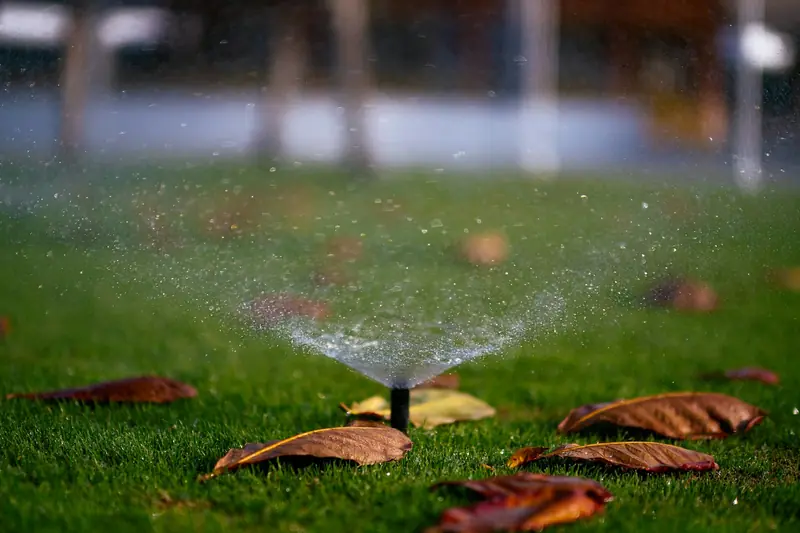
Best Smart Sprinkler Controllers and Hose Timers
A controller or hose timer keeps the early-morning schedule without you standing at the faucet.

FAQ
How much water does a lawn need?
Illinois Extension says cool-season lawns need about 1 to 1.5 inches of water per week to stay green and actively growing (Illinois Extension).
When is the best time to water?
Early in the morning. Midday watering loses much to evaporation, and night watering can promote turf diseases (Illinois Extension).
Will a smart controller save water?
EPA says a WaterSense-labeled controller can cut irrigation water use by up to 30%, or up to 15,000 gallons a year, compared with a clock-based controller (EPA WaterSense).
Related
-
-
Buying guide
Best Smart Sprinkler Controllers and Hose Timers
Zones, WaterSense label, weather scheduling and connectivity, side by side.
-
Guide
How High Should You Mow Your Lawn? Heights by Grass Type
Extension mowing heights by grass type, plus the one-third rule.
-
Guide
How to Calibrate a Fertilizer Spreader (Step by Step)
Test strip method, a worked example and the half-rate two-pass trick.
-
Buying guide
Best Fertilizer Spreaders (Broadcast and Drop)
Type, hopper size, spread width and edge guard, side by side.
-
Buying guide
Best Raised Garden Beds
Material, dimensions, fill volume and bottom type, side by side.


Get the Spring Lawn Startup Checklist
A printable checklist covering mower height, safety gear, spreader calibration, sprinkler output and raised-bed soil tests. Free, and sized for the garage wall.