
Best Robotic Lawn Mowers
A robotic mower cuts your lawn on a schedule while you do something else. The decisions that matter are how it finds its way around your yard, how big and steep a lawn it can handle, and which safety sensors it carries. This guide is for homeowners with a regular lawn who want to stop pushing a mower every week.
Jump to section
What we look for
Navigation
how the mower finds its boundary decides how much setup you do and how well it copes with your yard.
Rated lawn area
the rated area is the maker's limit for how much lawn one mower can finish on its schedule.
Maximum slope
a mower that cannot climb your steepest section will leave strips uncut or stall.
Safety sensors
collision sensors and a blade that stops when the mower is lifted or tipped are the safety features to look for.
App, zones and scheduling
good scheduling and zone control let the mower work around your family and your yard.
Rain handling and theft protection
a mower lives outdoors, so weather response and anti-theft features affect how long it lasts.
- Sources: manufacturer product pages and manuals, warranty terms, and Husqvarna's explanation of how robotic mowers work for the navigation, slope and safety basics.
How to choose the right robotic mower
Robotic mowers suit some yards far better than others. If you are still deciding between a robot and a person with a push mower, read robotic mower vs push mower. Mowing height still matters with a robot, and how high to mow lists the heights extension services suggest.
Navigation
Traditional robotic mowers follow a buried or pegged boundary wire. Wire-free models, such as Husqvarna's, use RTK-GNSS satellite positioning with virtual boundaries that you set in an app (Husqvarna). Check the Navigation column, then read the manual to see what setup your yard needs before you buy.
Rated lawn area
Compare the rated area with your actual lawn, not the whole lot. Measure only the mowable grass, including narrow side strips, and check that the total sits comfortably inside the rating. The rated area is a maker-stated figure, so treat it as a ceiling rather than a promise. If your lawn has separate front and back sections, read the manual to see how the mower moves between them.
Maximum slope
Slope limits vary a lot by model. Husqvarna says its standard models handle roughly 20 to 40% inclines and its all-wheel-drive models up to about 70%, around 35° (Husqvarna). Those are one maker's figures, so check the Max slope column for each pick. Measure your steepest bank before you shop.
Safety sensors
Look for collision sensors and blade-stop when the mower is lifted or tipped. Husqvarna lists both on its mowers (Husqvarna). Sensors do not replace supervision: keep children and pets off the lawn while it runs. Our lawn mower safety guide covers the age rules and the safety steps for every type of mower.
App, zones and scheduling
An app lets you set mowing windows, split the lawn into zones and pause the mower when you want to use the yard. Check whether the app is required for setup, whether it needs an account, and whether the mower still works from its own panel. If your lawn has separate front and back areas, look for multi-zone support.
Rain handling and theft protection
Some models use a rain sensor and others rely on a schedule you set. Check how the manual says to handle heavy rain and winter storage. For theft protection, look for a PIN code, an alarm or app tracking. Read the warranty terms too, and follow the manual's advice for winter storage.
Tips for using your robotic mower
- Robotic mowers cut a few millimeters at a time and leave fine clippings on the lawn, which Husqvarna calls micro-mulching (Husqvarna).
- Husqvarna suggests replacing the blades every 1 to 2 months (Husqvarna). Check your own maker's schedule.
- Read the lawn mower safety guide before the first run, and keep children inside while the mower works.
- Not sure a robot fits? Compare it with a battery-powered push mower first.
FAQ
How do robotic mowers know where to mow?
There are two main methods. Older designs follow a boundary wire that is buried or pegged along the lawn edge. Wire-free designs, Husqvarna's EPOS among them, rely on satellite positioning (RTK-GNSS) and a virtual boundary that you draw in an app (Husqvarna).
Can robotic mowers handle hills?
The answer changes from model to model, so read the slope figure for the one you are considering. As one maker's example, Husqvarna puts standard models at roughly 20 to 40% inclines and all-wheel-drive models at up to about 70%, or around 35° (Husqvarna).
What happens to the clippings?
Because the mower runs often and trims only a few millimeters at a time, the clippings are tiny and fall back into the lawn. Husqvarna calls this micro-mulching (Husqvarna).
Are robotic mowers safe around kids and pets?
Husqvarna lists collision sensors, and blades that stop at once if the mower is lifted or tipped (Husqvarna). Those are maker statements, and they do not replace supervision: keep children and pets off the lawn while the mower is working.
How often do the blades need replacing?
Husqvarna suggests every 1 to 2 months for its robotic mowers (Husqvarna). Check the schedule in the manual for the model you buy.
How does a robot's cut differ from a push mower's?
A push mower follows the one-third rule: for a lawn kept at 2 inches, mow before the grass passes 3 inches (UMass). A robotic mower takes off a few millimeters at a time instead (Husqvarna). Our comparison of robotic mower vs push mower goes through both approaches.
Related
-
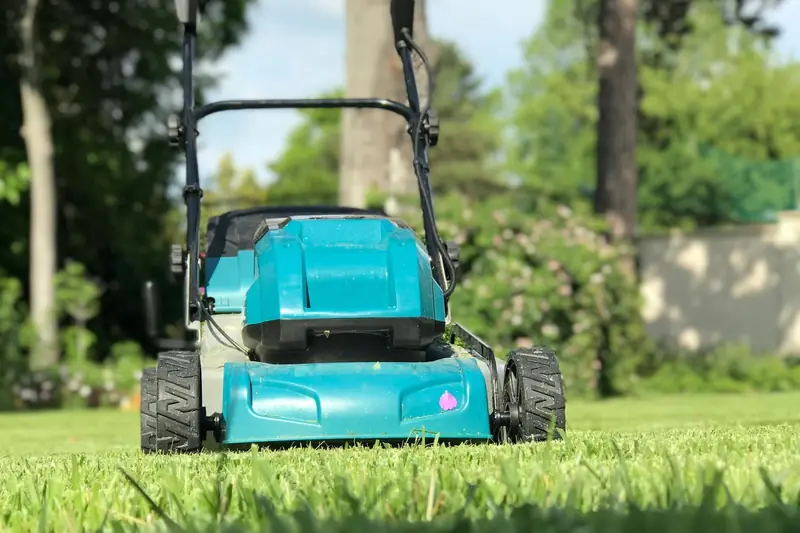
Buying guide
Best Battery-Powered Lawn Mowers
Deck width, battery size, drive type and cutting modes, side by side.
-
Comparison
Robotic Mower vs Push Mower: Is a Robot Worth It?
How robots navigate, what they cost to run, and where a push mower still wins.
-
-
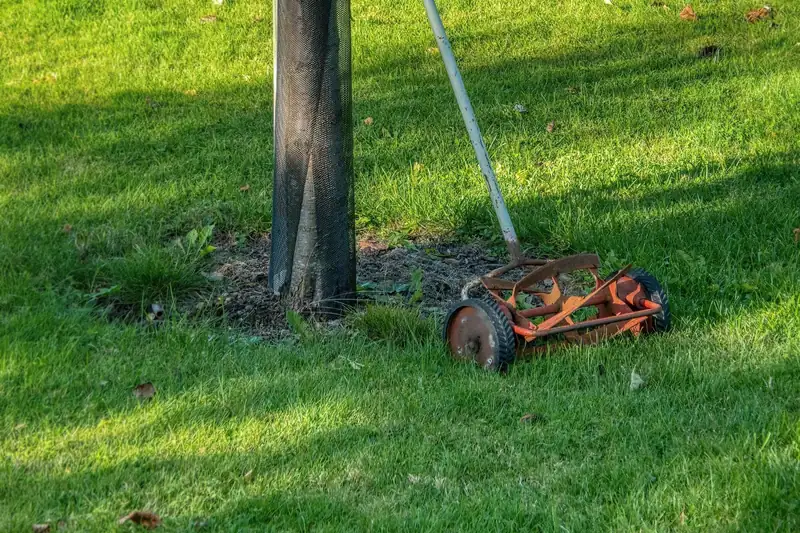
Buying guide
Best Reel Mowers (Manual Push)
Cutting width, blade count and height range for manual push mowers.
-
Guide
Lawn Mower Safety: Rules That Prevent the Worst Injuries
Age rules, protective gear, slopes and refueling, from CPSC and AAP.
-
Guide
How High Should You Mow Your Lawn? Heights by Grass Type
Extension mowing heights by grass type, plus the one-third rule.


Get the Spring Lawn Startup Checklist
A printable checklist covering mower height, safety gear, spreader calibration, sprinkler output and raised-bed soil tests. Free, and sized for the garage wall.